
Recruiter Insights
Career intelligence for professionals who are serious about their next move.

How to Build a Clear Career Narrative Across CV and LinkedIn
Your CV and LinkedIn should tell the same professional story, even if they use different formats. Learn how to clarify your career narrative, align your evidence, and make your next move easier for recruiters to understand.
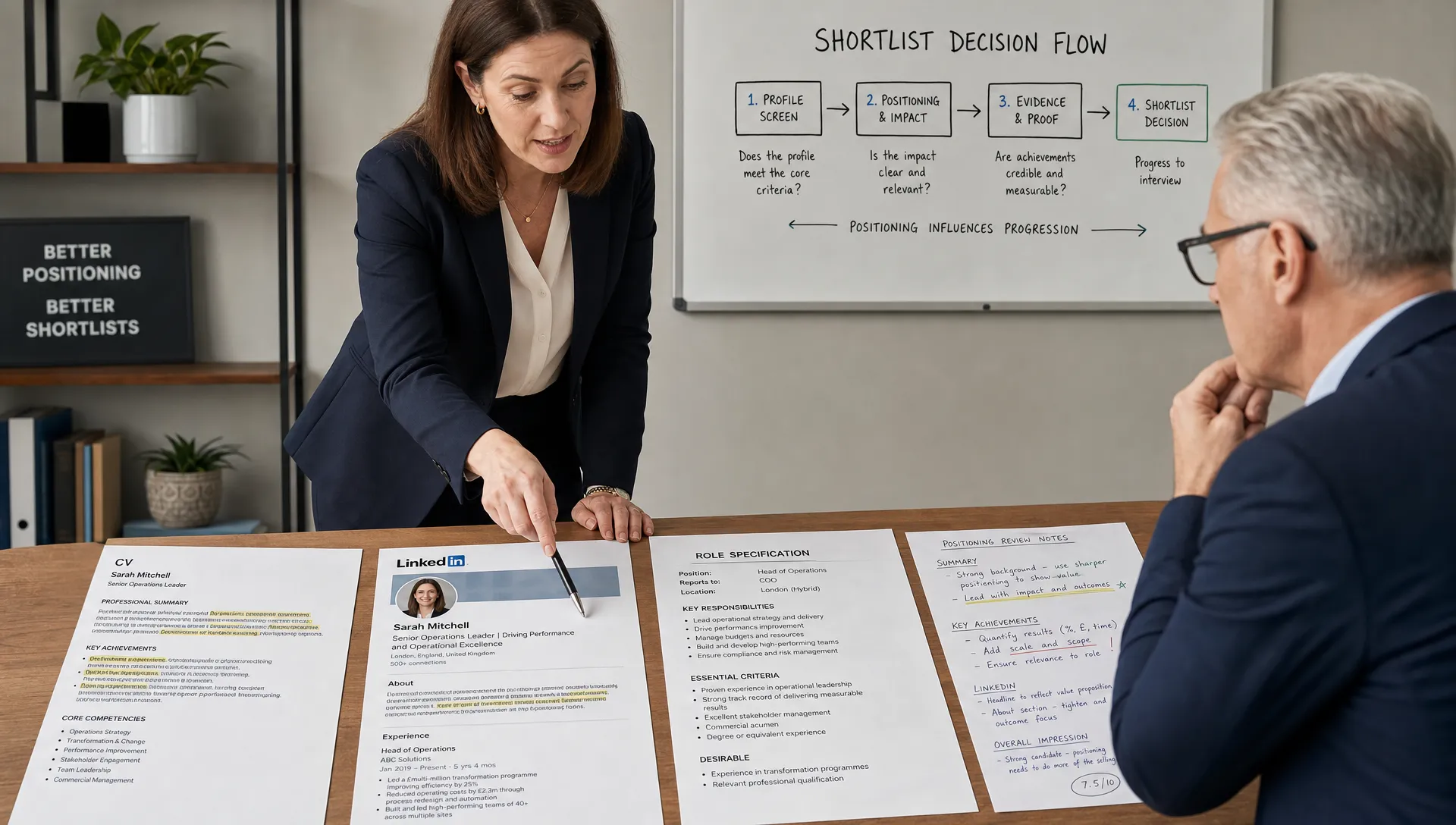
Why Profile Optimisation Improves Interview Shortlists
Interview shortlists are rarely decided by experience alone. Profile optimisation helps mid and senior professionals make their value clearer, align with hiring criteria and reduce the risk signals that stop strong candidates reaching interview.

Interview Preparation for Career Changers: Acing Interviews in a New Industry in 2026
Changing industry changes the interview challenge. Learn how to translate experience, research the market, use AI practice tools, and answer behavioural questions with confidence in 2026.

Salary Negotiation for Career Changers: Securing the Right Package in 2026
Changing careers should not mean undervaluing years of senior experience. Learn how to research your market worth, negotiate confidently, and secure a fair package when moving into a new field in 2026.

Networking for Career Changers: Building Connections in a New Industry in 2026
Career change networking works best when it is structured, relevant, and relationship-led. Learn how to map existing contacts, build new industry connections, and use LinkedIn and events with confidence in 2026.
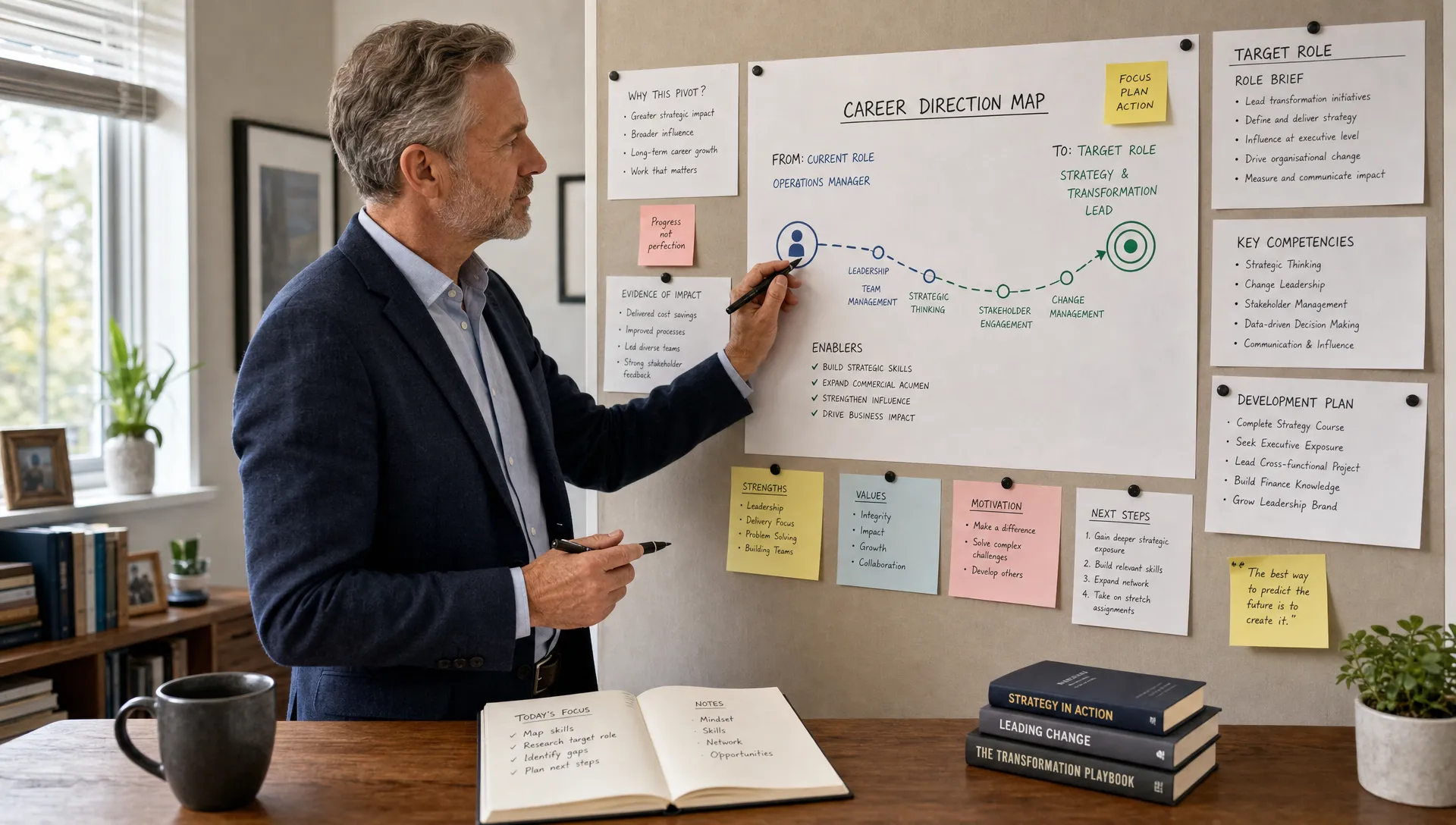
LinkedIn Profile Optimisation: Standing Out as a Career Changer in 2026
Career changers need more than a polished LinkedIn profile. This guide shows mid-senior professionals how to translate experience, highlight transferable skills, and build recruiter confidence in 2026.

How to Prepare for a Job Interview: The UK Professional Guide for 2026
Strong interviews are built before the meeting starts, especially for senior candidates and career changers. This guide shows UK professionals how to research, rehearse, handle virtual formats, and turn complex experience into confident answers in 2026.

AI Job Search: How to Use AI Tools and Still Stand Out in 2026
AI can speed up your job search, but generic applications are easier than ever to spot. Learn how to use AI tools strategically while keeping your CV, cover letters and interview preparation credible, human and recruiter-ready.
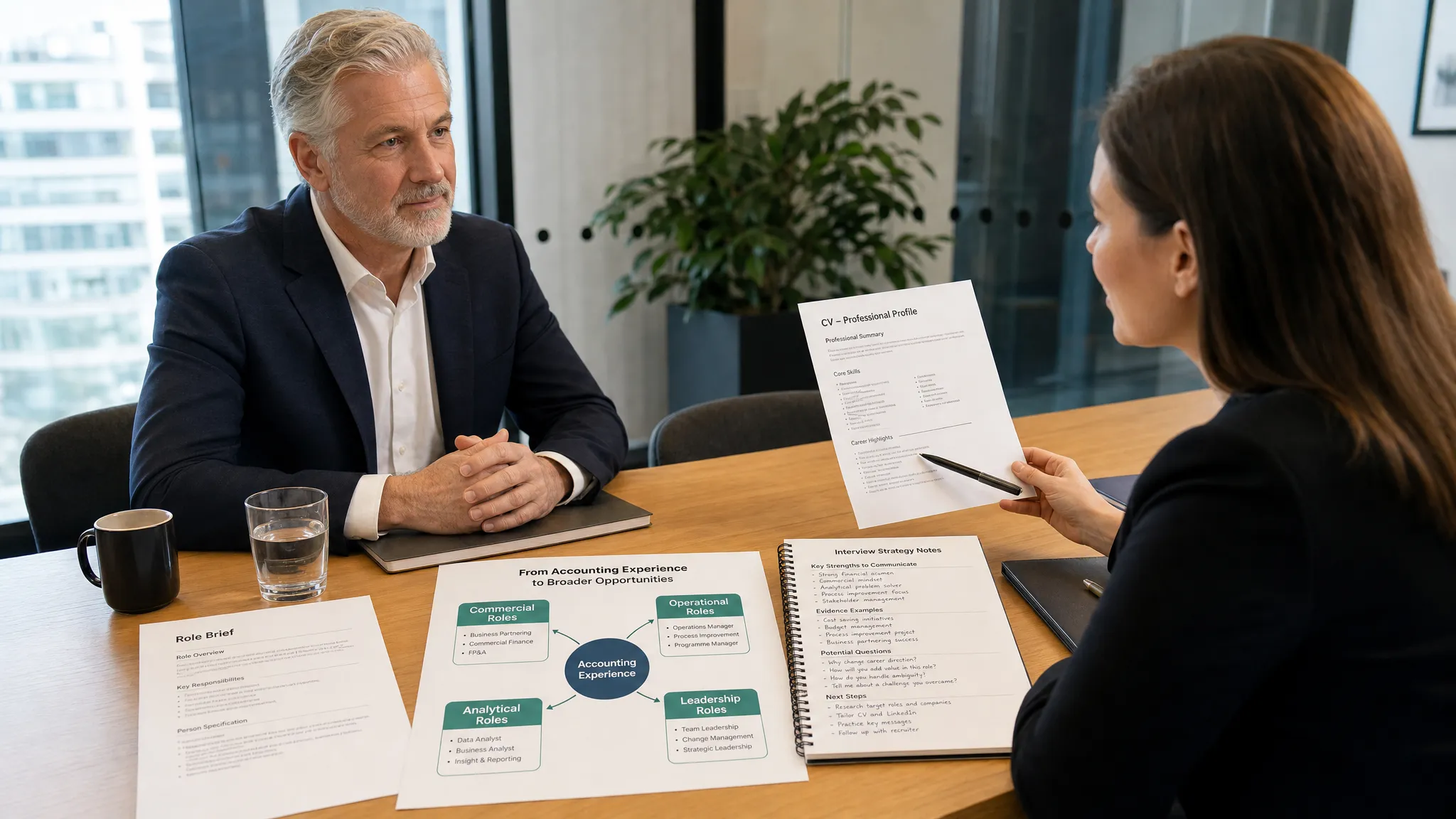
Career Change From Accounting: Where Your Skills Take You Next
Accounting can be a stronger launchpad for reinvention than you think. Learn where your financial, analytical, compliance, and stakeholder skills can take you next, plus how to reframe your profile for a credible UK career pivot.

Career Change at 45: Navigating the Mid-Career Shift
Changing career at 45 can be a strategic advantage when you translate experience into future value. Learn how to assess options, transfer skills, update your CV and plan a realistic mid-career pivot.

Career Change at 30: The Smartest Time to Pivot
A career change at 30 is not a late reset. It is a strategic point to use your experience, close targeted skills gaps and reposition your CV for stronger UK opportunities.

Career Change at 50: It Is Not Too Late — Here Is Proof
Changing career at 50 is not a fallback plan. With the right positioning, senior experience can become a powerful advantage for executive roles, consultancy, portfolio careers, or post-redundancy reinvention.

Career Change at 40: Your Complete UK Action Plan for 2026
Changing career at 40 does not mean starting again. This UK action plan shows how to choose realistic career paths, translate your existing skills, and reposition your CV and LinkedIn profile for 2026.

What Career Is Right For Me
If your current role looks successful on paper but feels wrong in practice, this guide gives you a structured way to decide your next move. Assess your skills, values, market fit and realistic constraints before changing career.

How to Explain a Change in Career on Your CV
A career change does not have to look risky on your CV. Learn how to connect your past achievements to your new direction with clear positioning, relevant evidence, and recruiter-friendly wording.
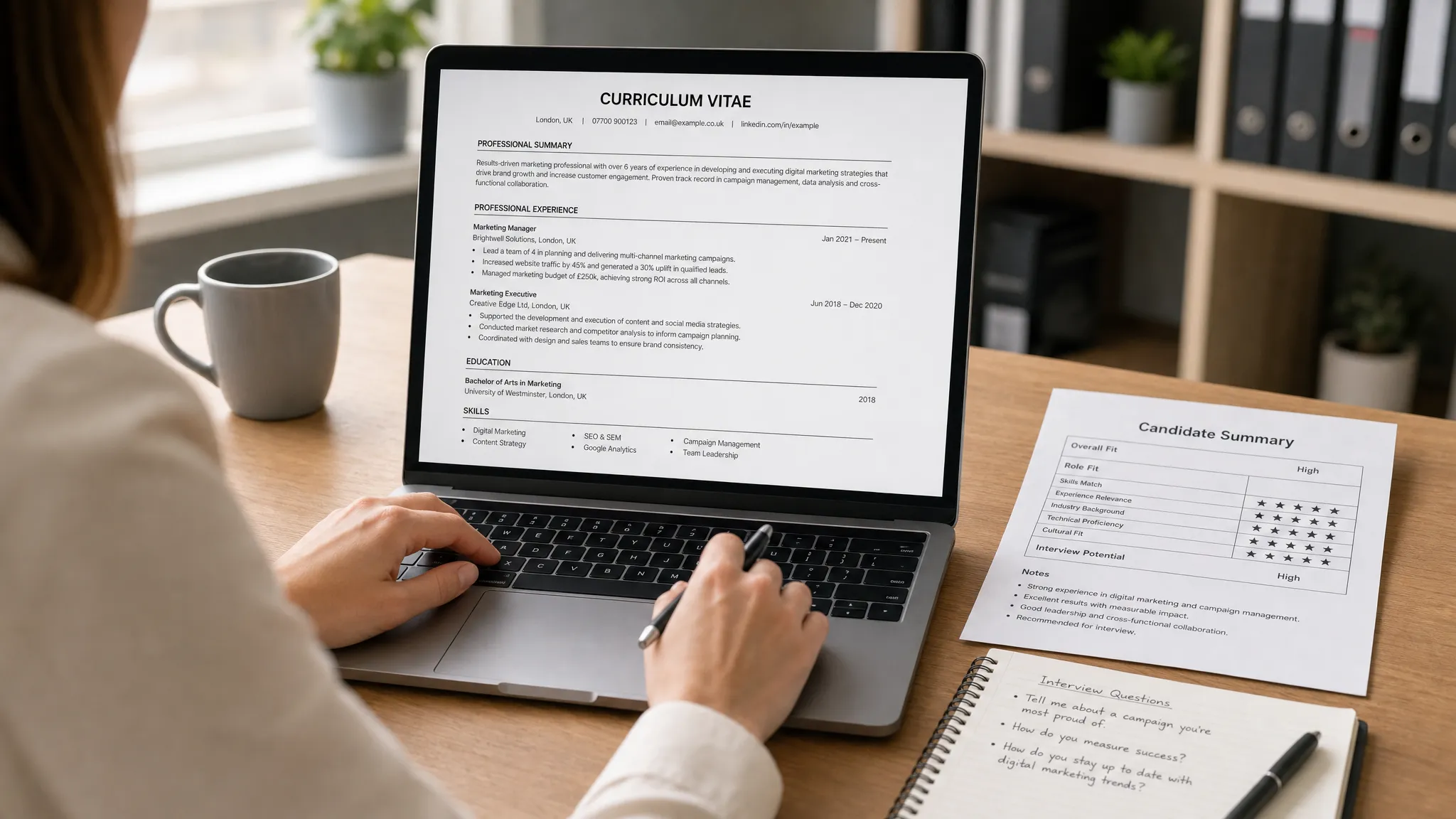
How to Write a CV Profile That Wins More Interviews
Your CV profile is often the first section a recruiter reads, so it has to earn attention quickly. This guide shows you how to position your value, prove impact, and tailor your opening summary for more interviews.
The First CV That Actually Gets Shortlisted
How early-career applicants can structure a one-page CV recruiters take seriously.
ATS Keywords That Actually Matter
What applicant tracking systems really scan for — and how to write for them without sounding robotic.
Writing a LinkedIn Headline for Senior Roles
Why most senior headlines underperform — and the recruiter-tested format that fixes it.
The Executive Summary Framework Search Firms Use
Commercial impact and scope clarity: the two pillars every C-suite profile must lead with.
Interview Stories That Actually Land
A structured way to answer behavioural questions without sounding rehearsed.
What Recruiters See First — And Why It Decides Everything
An inside look at the 11-second scan that filters most senior profiles out.
Positioning Yourself for a Career Pivot
How to translate transferable experience into a credible story for a new sector.
Building a Graduate LinkedIn From Scratch
A step-by-step setup that signals professionalism before you have years of experience.

Preparing for a Board-Level Interview: How Executive Candidates Stand Out
Board-level interviews test judgement, strategic thinking and governance maturity—not simply technical capability.